How To Pressure Clean Brick, Concrete & Pavers Safely: A Port Macquarie Guide By Surface Type
If you've ever pointed a pressure washer at a driveway and watched the coloured sealant lift or the joint sand disappear in a cloud of grit, you'll know the damage isn't hypothetical. Different surfaces react to pressure in completely different ways, and the right technique for brick can wreck a stamped concrete finish. This guide breaks it down surface by surface, so you know exactly what you're dealing with before you start.
Why Surface Material Matters More Than Pressure Alone
Most DIY
driveway pressure cleaning mistakes come down to one thing: treating every hard surface the same way. Brick, concrete, exposed aggregate and pavers all have different densities, coatings and joint structures, and each one has a specific failure point under pressure. Mortar erodes, colour coatings lift, aggregate pits, and paver joint sand blasts out, often before you even notice the surface looks "clean". This is why
pressure cleaning Port Macquarie professionals assess the material first and the equipment second. Once you understand how your surface behaves, matching it to
the right pressure settings and nozzles is the next step, and we've broken that down in a separate guide on pressure settings and nozzle selection if you want the technical detail. For now, this guide focuses on the surface itself.
Preparing the Area: Debris, Plants & Fixtures
A bit of prep saves a lot of regret. Before you start:
- Sweep loose debris, leaves and grit off the surface so you're not grinding dirt into the material
- Wet down garden beds and lawn edges bordering the area, since runoff carrying detergent or grime can stress plants
- Cover or move outdoor furniture, pot plants and any timber fixtures nearby
- Check for loose mortar, cracked pavers or lifted edges first, since pressure will find and worsen any existing weakness
- Test your technique on a small, hidden section before working across the whole surface
Skipping this step is where a lot of avoidable damage starts, not from the pressure washer itself, but from what it exposes or washes into.
Pressure Cleaning Brick Safely (and Protecting the Mortar)
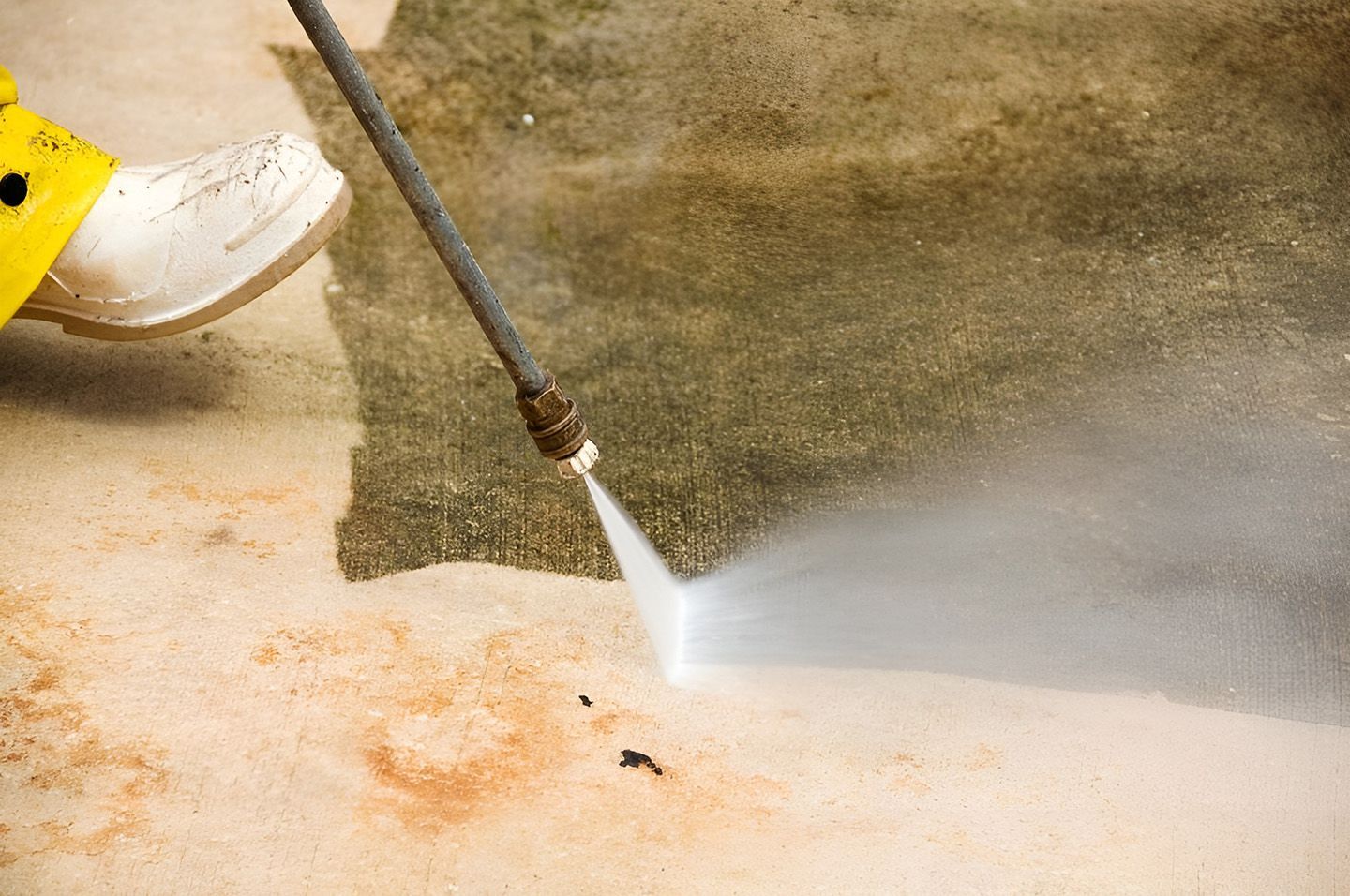
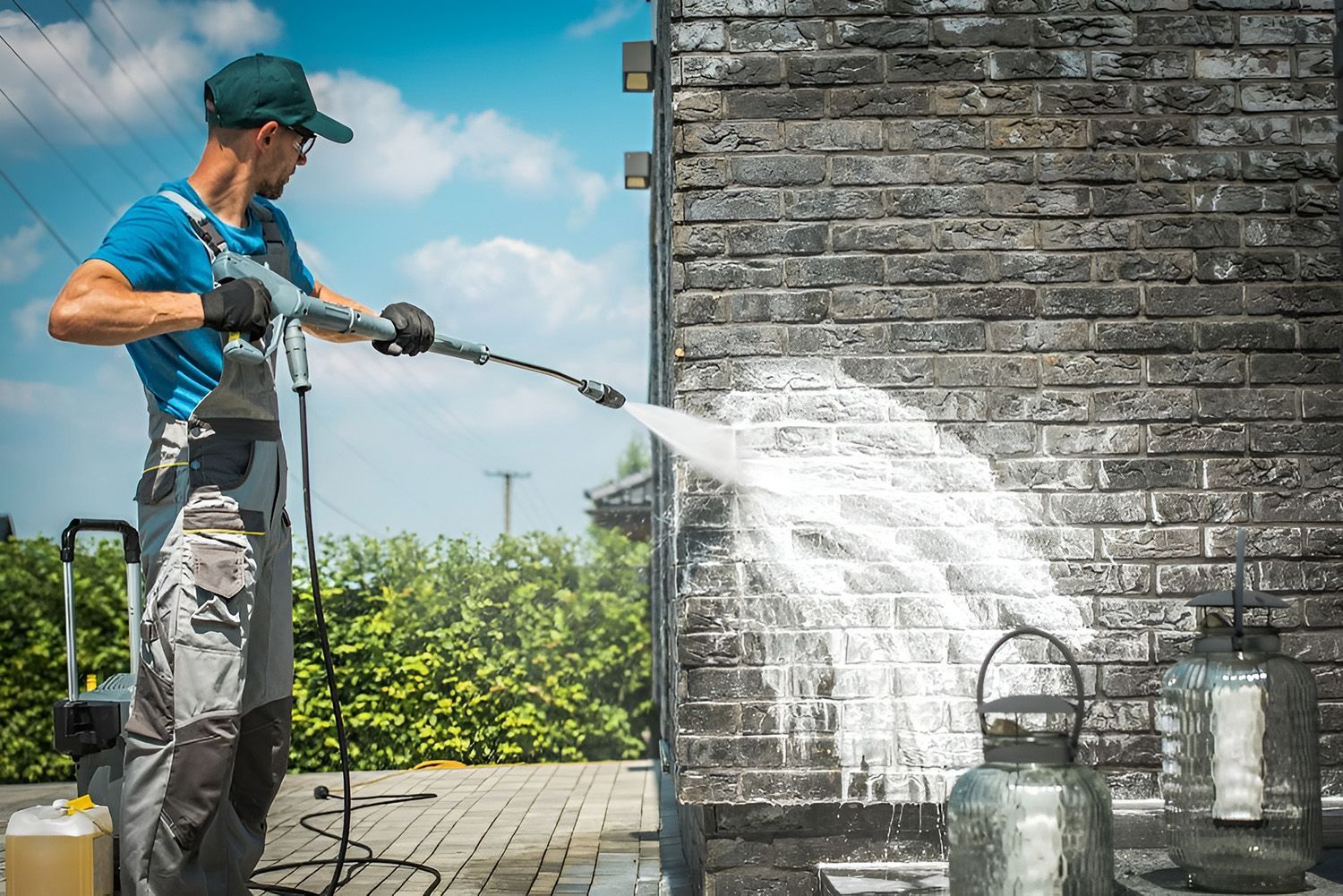
Brick itself is fairly tough, but the mortar between the bricks isn't. Pressure washing brick is generally safe, but the mortar is softer and more porous, and it's the first thing to erode under a direct, high-pressure blast held too close or too long in one spot. Once mortar starts washing out, you're looking at repointing work, not just a clean. The safer approach is a wider fan spray held at a consistent distance, moving steadily rather than lingering on joints. Angle the spray slightly rather than firing straight into the mortar lines, and keep the nozzle moving continuously. Older or heritage brickwork, or anything with visibly crumbling mortar, is a good candidate for a lower-pressure approach or professional assessment rather than a DIY attempt.
Cleaning Concrete: Plain, Coloured, Stamped & Stencilled
Plain grey concrete is one of the more forgiving surfaces for pressure cleaning concrete, but coloured, stamped or stencilled finishes are a different story. These rely on a surface coating or integrated colour layer, and too much pressure, or the wrong nozzle angle, can strip or fade that finish unevenly, leaving patchy, lighter patches that are hard to fix without a full reseal. For coloured and decorative concrete, keep the pressure moderate, work in consistent overlapping passes, and avoid holding the nozzle in one spot. For plain, coloured, stamped or exposed-aggregate driveways specifically, our driveway pressure cleaning service tailors the method to the exact finish, since a stencilled driveway and a plain slab genuinely need different handling.
Exposed Aggregate — Why It Needs a Gentler Approach
Cleaning exposed aggregate looks straightforward because of the stone content, but the surface is actually more vulnerable than it appears. The binding matrix holding the stones in place can be worn away by excessive pressure, leaving pitted, loose or dislodged aggregate over time. It's a gradual kind of damage too, so it's easy to not notice until the surface starts looking rough or uneven. A lower-pressure, wider-angle approach works best here, paired with more passes rather than more force. If the aggregate is older or already showing signs of wear, this is a surface where professional judgement genuinely pays off, since the margin for error is smaller than it looks.
Interlocking Pavers: Cleaning Without Blasting Out the Joint Sand
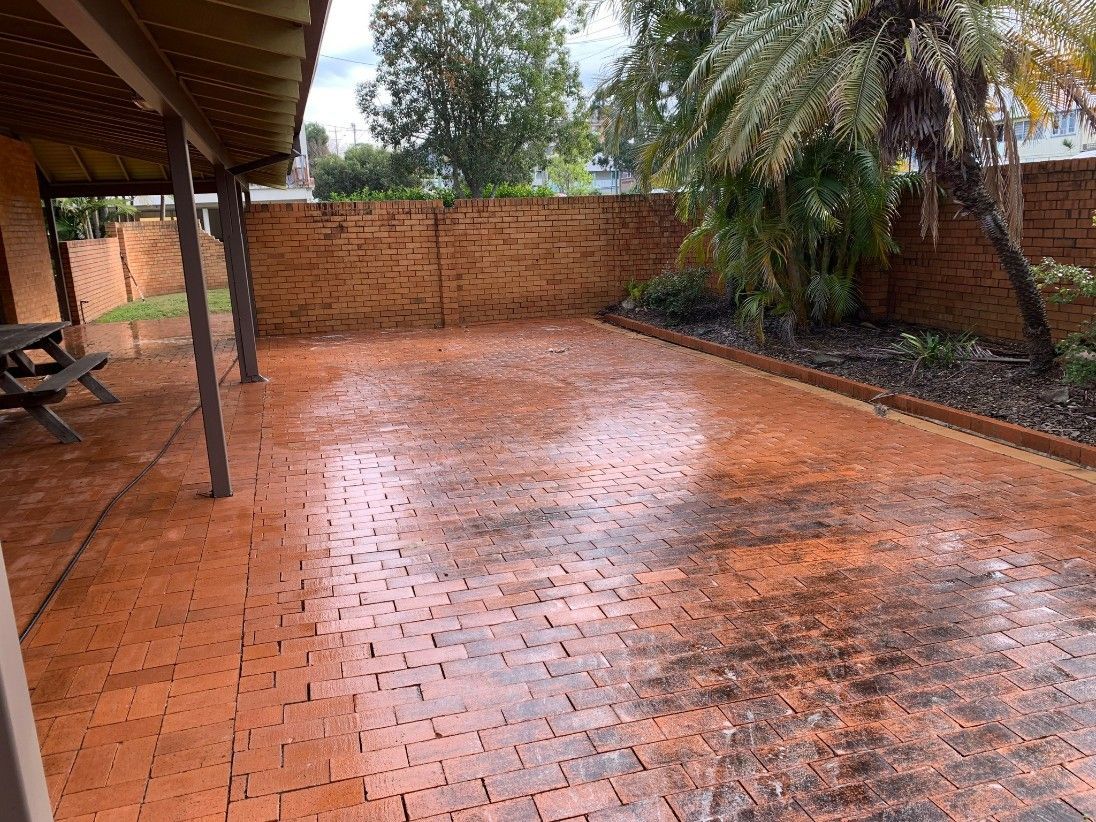
How to pressure clean pavers without causing damage comes down to protecting the joints. That fine sand between interlocking pavers holds them in place and stops shifting, and it's remarkably easy to blast out with a direct high-pressure stream. Once the joint sand is gone, pavers can start moving, rocking or shifting underfoot, and the fix means re-sanding the entire area.
Keep the spray angled across the paver surface rather than straight down into the joints, and avoid concentrated bursts in one spot. After cleaning, it's worth checking the joints and topping up sand if needed, rather than assuming they're fine.
Removing Oil, Grease & Organic Stains
Oil, grease, rust and organic staining (algae, moss, tannin marks from leaves) all need a different approach to general grime, and pressure alone often isn't enough for proper concrete stain removal. Oil and grease sit in the pores of concrete and pavers, so pressure can spread the stain sideways rather than lifting it. Stubborn driveway marks need more than water pressure, and we've covered removing tough oil and grease stains from Port Macquarie driveways in more detail in a separate guide, including which pre-treatments actually work before you pressure clean.
When to Stop and Call a Professional
Some situations are worth recognising before you start, not after something's gone wrong:
- Heritage or older brickwork with visible mortar wear
- Coloured, stamped or stencilled concrete you can't afford to damage
- Exposed aggregate showing early signs of pitting or loosening
- Large paver areas where re-sanding the whole joint network would be a major job
- Any surface where you're not confident picking the right pressure and angle for the material
If a surface looks too risky to tackle yourself, the team behind
Complete Pressure Cleaning offers professional pressure cleaning Port Macquarie property owners trust to clean surfaces properly without causing damage that costs more to fix than the clean itself.
FAQs